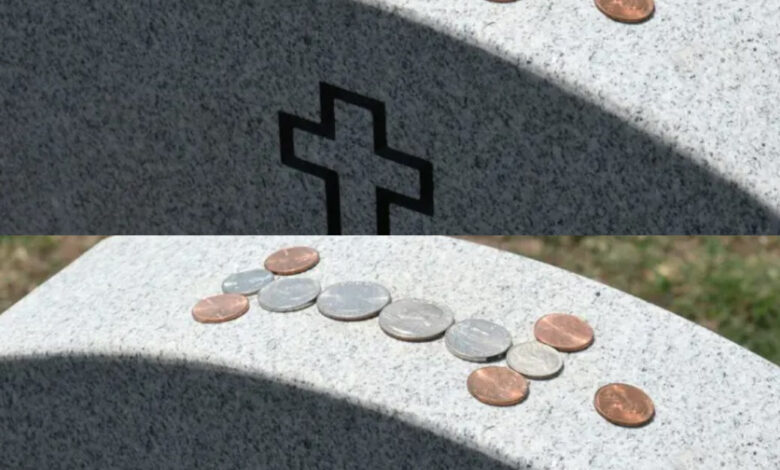
The Hidden Meaning of Coins on Soldiers’ Graves
Walking through a cemetery, you might spot small coins resting on gravestones, each one a quiet symbol of respect and memory. These tiny tokens carry deep meaning, especially for those who served in the military. They tell stories of gratitude, connection, and honor, creating a powerful link between the living and those who have passed. This touching tradition is a way to remember the sacrifices of service members in a simple yet profound way.
The custom of placing coins on graves comes from military traditions, where each coin has its own special message. A penny shows someone stopped by to honor the deceased, whispering, “You’re not forgotten.” It’s a small act that keeps a soldier’s memory alive. A nickel means the visitor trained alongside the fallen, sharing the challenges of boot camp and building bonds that last beyond life.
A dime carries a heavier meaning—it shows the visitor served with the deceased, sharing the highs and lows of military life. It speaks of loyalty and trust built through tough times. A quarter, though, is the most personal. It means the visitor was there when the soldier passed, marking a moment of shared grief and a promise to always remember.
For families, seeing coins on a loved one’s grave brings comfort. Each coin is proof that others value their sacrifice, whether they knew the soldier or simply wanted to pay respects. The tradition goes beyond words, showing the strength of military bonds and the gratitude felt by communities. It’s a reminder that those who served are never truly gone.
These coins are more than metal—they’re stories of courage, friendship, and service. The next time you see one on a gravestone, pause to think about the lives it connects. This quiet tradition keeps the memory of heroes alive, ensuring their sacrifices echo through time with every penny, nickel, dime, or quarter left behind.